Ice Chest vs Cooler: What Is the Difference?
There is no real difference between an ice chest and a cooler. Both are insulated boxes that keep food and drinks cold with ice or ice packs. The words are used for the same thing, and the only real choices are size, hard or soft, and whether you want wheels.
On this page (8 sections)
- Are ice chest and cooler just two names for the same thing?
- What really changes between one cooler and another?
- Hard cooler or soft cooler: which name fits which?
- How much cooler do you need for a trip?
- When do wheels make a cooler worth choosing?
- Which cooler works best as an ice chest for camping?
- How do you keep ice longer in any cooler?
- So, is an ice chest the same as a cooler when you buy?
An ice chest and a cooler are the same thing. Both are insulated containers that hold ice and keep food and drinks cold.
The difference between an ice chest and cooler comes down to regional wording and store labels, not to how the box works.
People in some parts of the country grew up calling the hard box an ice chest. Catalogs and big retailers mostly print "cooler" on the box.
If you search either word, you'll find the same insulated boxes, bags and wheeled carts.
Are ice chest and cooler just two names for the same thing?
Yes, the two words describe one product type. An ice chest is an insulated box for ice and food, and so is a cooler.
Neither name promises thicker foam or longer ice life.
The terms split by habit and region more than by design. Older catalogs often listed "ice chests" as steel or plastic boxes for camping.
Today the same items sit under "coolers" next to soft bags and rolling carts.
Some shoppers use ice chest for a hard-sided box and cooler for any insulated container. That's a useful shorthand in conversation, but you won't find it enforced in product names.
A "wheeled ice chest" and a "rolling cooler" can be the exact same model.
When you compare two products, ignore the label. Check the capacity in quarts or cans, the insulation, the drain and the weight.
Those are the facts that change how the box performs on a hot day.
What really changes between one cooler and another?
Four things matter: size, insulation, how you move it, and the extras. The name on the lid doesn't change any of them.
These are the points where two boxes that look alike start to differ.
Size comes first. Capacity is given in quarts or in cans, and the gap is wide: the Coleman Xtreme Rolling Cooler holds 84 cans in a 50-quart body, while the Igloo Maxcold Glide 110 holds 168 cans in 110 quarts.
A bigger box stays cold longer when it's full, but it's heavier to load and harder to fit in a car trunk.
Insulation decides ice life. Thick foam in the walls and lid slows heat, and some makers quote a number of days.
Coleman says its double-wall lid and body keep ice up to 5 days at 90°F. The RTIC 45 Ultra-Tough uses up to 2.8 inches of closed-cell foam for the same goal.
Our guide to how long will ice last in a cooler breaks down what shifts that number.
Mobility covers handles, wheels and weight. Extras include drains, bottle openers, seat-ready lids and lid nets.
A drain matters once the ice starts melting and the box gets heavy.
Hard cooler or soft cooler: which name fits which?
Hard boxes are the classic ice chest, and soft bags are the newer cooler. Both keep drinks cold.
The shell and the foam are what separate them, not the word on the label.
A hard cooler has a rigid plastic shell and a lid that often supports weight. It resists bumps in a truck bed and holds ice longer when the walls are thick.
The trade-off is bulk: the RTIC 45 Ultra-Tough weighs 29.5 lb empty, before you add ice and drinks.
A soft cooler is a fabric bag with foam inside. It folds flat, fits under a seat and weighs little.
It suits a lunch, a few drinks or a short trip where you carry the bag by hand.
Pick a hard box if you need ice to last a full weekend or you want a seat. Pick a soft bag if you walk to the beach or pack a small car.
Our guide to ice packs vs ice in a cooler covers what goes inside either one.
How much cooler do you need for a trip?
Match the capacity to the number of people and the hours away. An oversized box wastes ice and space, and an undersized one runs out before the day ends.
For a family picnic or a day at the beach, a 45 to 50-quart box is a practical middle. It holds enough drinks and food for several people and stays light enough to lift.
The RTIC 45 Ultra-Tough fits up to 60 cans in a 45-quart body.
For a tailgate, a camping weekend or a party, step up to 80 to 110 quarts. The Coleman Xtreme Rolling Cooler holds 84 cans, and the Igloo Maxcold Glide 110 holds 168.
At that size, wheels stop being a luxury.
Count what you'll carry, then round up. A box filled with ice and drinks is heavy, so the largest size you can still move safely is the right size.
If ice life is your main worry, see which cooler keeps ice the longest.
When do wheels make a cooler worth choosing?
Wheels matter once the box passes about 50 quarts or you carry it more than a short walk. A full large cooler is heavy, and pulling beats lifting.
The Coleman Xtreme Rolling Cooler has all-terrain wheels and a retractable telescoping handle that collapses for storage. That setup suits sand, gravel and grass, where a plain handle would mean carrying the load.
Its drain also lets you empty meltwater without tipping the box.
The Igloo Maxcold Glide 110 pairs its 110-quart body with a telescoping handle and soft-ride wheels. Moving 168 cans by hand would be a chore; rolling it is the point of that model.
Skip wheels if your cooler stays in one spot or lives in a car trunk. A small hard box or a soft bag is easier to lift in and out.
Which cooler works best as an ice chest for camping?
A hard box with thick insulation and a drain is the camping pick. Camping means several days away, warm days and a box that sits on the ground.
The Coleman Xtreme Rolling Cooler is built for that pattern. Its double-wall lid and body keep ice up to 5 days at 90°F according to Coleman, and its lid supports up to 250 lb as an extra seat.
All-terrain wheels help on a campsite with no path.
The RTIC 45 Ultra-Tough takes the durability angle. It's rotomolded for impact resistance, holds up to 60 cans, and adds a built-in bottle opener and a silicone cargo net in the lid.
At 29.5 lb empty it's a box you set down and leave.
Skip both if you camp from a car with little room. A soft bag that packs flat will fit better and still keep a day's food cold.
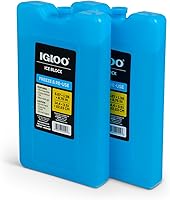
Pair either hard box with good cold packs from our guide to the best ice packs for coolers.
How do you keep ice longer in any cooler?
Start with a cold box, fill the empty space and keep the lid shut. The label doesn't matter here; the habits do.
These steps work in an ice chest or a cooler of any brand.
Chill the box before loading it. A warm interior melts the first layer of ice before the food is even in.
If you can, add a bag of ice a few hours early and pour off the water.
Fill gaps with ice or ice packs so there's little air left. A full box holds cold better than a half-empty one.
Pre-chill drinks and food, since warm items pull cold out of the air fast.
Keep the lid closed and park the box in shade. Every opening lets warm air in and pushes cold air out.
A blanket over the top adds a little more shade on a hot day.
A drain helps on multi-day trips, because you can remove meltwater without opening the lid wide. Some people leave the water in, since cold water also helps.
Test both on your next trip and keep what works.
So, is an ice chest the same as a cooler when you buy?
Yes. Buy by size, shell and wheels, not by the name.
The difference between an ice chest and a cooler is a word, and the rest is a set of real choices you can compare.
For most families, a 45 to 50-quart hard box covers day trips and short camping. The RTIC 45 Ultra-Tough is the durable pick if the box gets knocked around.
The Coleman Xtreme Rolling Cooler wins when you want wheels, a seat and a drain in one box. The Igloo Maxcold Glide 110 is the one for big groups, with room for 168 cans and wheels to move it.
If you mostly carry drinks a short way, a soft bag is lighter and easier. Match the box to how far you carry it and how long you need ice, and the name on the lid won't matter at all.
Check the capacity, the insulation and the weight first, then choose.
Frequently asked questions
Why do some people say ice chest and others say cooler?
The words come from different habits rather than different products. Ice chest is a common older term in parts of the US, while cooler is the more general word used in catalogs.
Both describe a box built to hold ice and keep contents cold.
Does a hard cooler keep ice longer than a soft one?
It often does, because a hard shell can hold thicker foam in the walls and lid. The Coleman Xtreme Rolling Cooler uses double-wall insulation that Coleman says keeps ice up to 5 days at 90°F.
A soft bag with thin walls will usually lose ice faster.
Do I need wheels on a cooler?
Wheels help when the cooler is large or you carry it far. A 110-quart model like the Igloo Maxcold Glide 110 holds 168 cans and is heavy when full, so its wheels and telescoping handle do real work.
Small coolers for a few hours are easy to carry without wheels.
Can I use a cooler as a seat?
Some hard coolers double as a seat. The Coleman Xtreme Rolling Cooler has a heavy-duty lid that supports up to 250 lb.
Check the maker's weight limit before sitting on any cooler, and never sit on a soft bag.
What should I check first when buying a cooler?
Start with the size you need and how you'll move it. Then look at insulation, the drain, and whether the lid can double as a seat.
Those four points decide most of the difference between one cooler and another.