How to Check What Cooler You Have
To check what cooler you have, look for a molded-in name or badge on the lid, front and sides, then measure the outside and inside of the box. Those two steps usually narrow it down to a brand and a size even when the sticker is gone.
On this page (8 sections)
- Where do cooler makers put the brand name?
- How do you read a cooler label or sticker?
- What do the molded markings tell you?
- How do you measure a cooler to find its size?
- How can you tell one brand from another at a glance?
- Which parts fit once you know the model?
- When should you contact the maker instead of guessing?
- What is the fastest way to identify your cooler?
To check what cooler you have, look for a molded-in name or badge on the lid, front and sides, then measure the outside and inside of the box. Those two steps usually narrow it down to a brand and a size even when the sticker is gone.
Most people ask this because they want the right parts or the right liner. A cooler with no paperwork can still be identified by the marks on the shell and a tape measure.
Where do cooler makers put the brand name?
Start on the lid and the front panel. Those are the spots where makers mold or print their logo, and they survive years of sun and scrubbing.
Look along the rim of the lid first, since some brands put the name there in raised letters. Then check the front panel above the latch or handle, and the sides near the base.
Shine a light at a low angle across the plastic. Faded or sun-bleached lettering often shows up as a raised shape in raking light even when the color is gone.
Badges and metal plates are another common sign. A screwed-on badge usually names the brand, and the model name sits nearby in smaller molded letters.
Check the underside of the lid as well. Some makers mold the model line into the lid interior where it stays out of the sun.
If your box carries a name you recognize, our YETI model list can help you match the lettering to a specific size.
How do you read a cooler label or sticker?
Find the sticker near the drain, the handle mount or the back panel. Cooler stickers hold the model number, capacity and sometimes a date code.
Read the sticker in good light and photograph it before wiping it clean. Heat, salt water and UV make these labels brittle, and the print can rub off under a thumb.
The model number is the string of letters and digits you want first. Copy it exactly, including any dash or space.
Capacity often appears as a quart figure and sometimes as a can count. Treat those numbers as the box volume, not as the usable space inside.
A sticker may also show a serial or batch code. That code tracks production, so it helps a brand's support team confirm the exact run.
If the label is gone or unreadable, move on to the shell and the tape measure. The molded details are usually harder to lose than the sticker.
What do the molded markings tell you?
Molded numbers and letters are a second trail to the model. They often appear where the shell was formed, so they survive when stickers don't.
Turn the cooler over and check the base. Many boxes carry a small molded number in the foot or near the drain, sometimes inside a circle or rectangle.
Look inside the walls near the rim, and under any removable basket or divider. Manufacturers sometimes stamp the mold number where it stays hidden from view.
Treat that number as a mold or part code rather than a model name. It can still help: send it to the brand's support line and they can often match it to the model.
Don't confuse a recycling code with a model number. A small triangle with a number inside tells you the plastic type, nothing more about the cooler.
Write down every mark you find before you search. Two or three codes together usually solve the puzzle faster than one on its own.
How do you measure a cooler to find its size?
Measure the outside length, width and height with the lid closed, then the inside floor and depth. Outside dimensions set the model size; inside dimensions tell you what fits.
Use a tape measure and record numbers to the nearest quarter inch. Round boxes and tapered walls make a rough guess useless, so be precise.
For the inside, measure the floor length and width, then the depth from the floor to the lid rim at the deepest point. Note any drain or shelf that steals space.
Match the outside numbers against the brand's current model chart. A cooler that comes out at a common size like a 45 or a 65 quart box often lands within an inch of the brand's stated footprint.
Keep in mind that quart figures describe the box, not the usable room. Two coolers at the same capacity can hold different amounts once ice and food go in.
Our guide to how long ice lasts in a cooler explains how wall thickness and lid design change real cooling performance.
How can you tell one brand from another at a glance?
Shell shape, latch style and lid design give most brands away. A few visual clues can point you to the right maker before you find any lettering.
Rotomolded coolers like many YETI, Pelican and RTIC boxes have thick, solid walls and a heavy lid with a rubber gasket. Thin-walled boxes with molded ribs are typical of standard hard coolers.
Look at the latches. Rubber T-handles, side cam latches and simple snap clips each belong to different design families, and the maker's pattern usually repeats across its range.
Handles and wheels are another clue. A molded-in side handle, a rope handle or a folding wheel kit points to particular product lines and price tiers.
Color can help too, since some brands run signature shades. Don't rely on color alone, because many makers offer the same palette.
When two brands look alike, measure the box and check the lid interior. Small differences in length and latch placement usually separate them.
Which parts fit once you know the model?
Knowing the model lets you buy parts that actually fit. Cooler accessories are sized to specific boxes, and the wrong size wastes money.
Our guide to cooler accessories worth buying covers the add-ons that earn their space in most boxes.
Dry storage is the first upgrade many people want. The {{product B08ZXKCBTS | An elastic net that sticks inside the lid to keep food and napkins out of the meltwater.}}
It measures 9 5/8 in by 14 in and stretches to about 19 in, with a hook-and-loop strip that lifts off for washing. Above Sea Level designs it to fit boxes from YETI, RTIC, Ninja, Igloo, Coleman, Lifetime and Pelican.
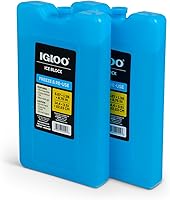
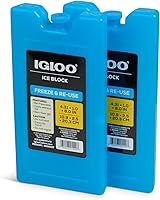
Ice packs are the second upgrade once you know how big the box is. The {{product B0C6V3MN8D | A 6.5 lb refreezable block sized for medium to extra-large hard coolers.}}
Igloo recommends at least 1 block for a 16 to 30 quart box, 2 for 48 to 75 quarts and 3 for 94 to 165 quarts. The gel is non-toxic, and the modular shape lets you pack around food.
The {{product B0F63XPW9B | A 2 lb YETI block that works as an ice substitute or an addition to loose ice.}} It measures 8 in by 5 3/8 in by 1 5/8 in and comes in several sizes for boxes from the Hopper Flip 12 up to the Tundra 350.
If you're deciding between blocks and cubes, read our comparison of ice packs vs ice in a cooler. Blocks last longer; cubes chill faster.
When should you contact the maker instead of guessing?
Contact the brand when the marks are gone and the measurements sit between two models. A short email with the size and any codes saves you from buying the wrong lid or latch.
Gather your photos, the outside and inside dimensions and any molded numbers before you write. Support teams match those details against old catalogs that aren't public.
Ask about the specific part you need, too. A replacement drain plug or latch has its own number, and the brand can confirm it fits your box.
Don't buy parts from a listing that only names a capacity. A 45 quart lid from one maker rarely fits a 45 from another, even when the numbers match.
If you can't reach support, wait before ordering. A measurement-driven guess is fine for a liner or a net, but a poor one for a lid or a hinge.
Knowing what cooler you have also helps when you resell it or pass it on. A clear model name and size make the listing accurate and the buyer confident.
What is the fastest way to identify your cooler?
For most people, the fastest path to how to check what cooler you have is the lid lettering first, the sticker second and the tape measure third. Photograph everything you find before cleaning the box.
Match the brand and the outside size against the maker's model chart. Then buy only parts that name that model, such as a fitted lid net or ice blocks rated for the capacity.
If you plan to load the box for a long trip, check the best ice packs for coolers before you pack. The right size matters as much as the right brand.
Write the model and size on a strip of tape inside the lid. Next time the sticker fades, you'll have the answer right where you need it.
Frequently asked questions
Can I find the cooler model from the serial number alone?
Only if the number is still legible and the brand publishes a lookup. A serial often identifies a production batch rather than the model name, so use it together with the brand name and the box size to be sure.
What if my cooler has no name anywhere on it?
Measure the outside length, width and height, then compare those numbers to current and older models from the main brands. A plain box with rounded corners and a hinged lid often traces back to a house brand or a discontinued line.
Does the size on the cooler mean how much it holds in practice?
No. The quart number is the box volume, and usable capacity runs smaller once walls, the lid and any drain take up space.
Judge real holding power by the inside dimensions and how much ice you can fit around your food.
How do I tell a rotomolded cooler from a regular one?
Rotomolded boxes usually have thick, smooth walls, a one-piece shell and a heavy lid with a rubber gasket. Thin plastic walls, molded ribs and a thin lid point to a standard hard cooler instead.